

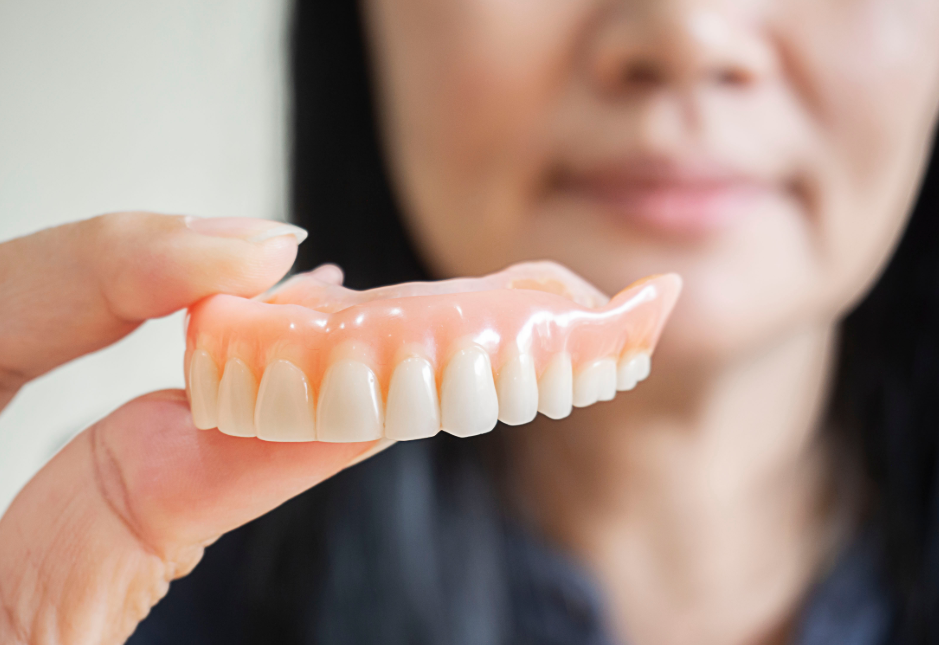
You’d think gravity would be more than enough to keep your lower denture from slipping around, right? Unfortunately, anyone who wears dentures knows that isn’t always the case! Loose lower dentures can make everyday activities like eating, speaking, and laughing surprisingly frustrating. But why are lower dentures so much harder to keep in place than upper ones?
The answer has a lot to do with your anatomy. Fortunately, there are several ways your dentist can help improve the fit and stability of your dentures.
1. Your Lower Jaw Has Less Surface Area
One of the biggest reasons lower dentures tend to move around is that they have less surface area to rest against. Upper dentures cover a relatively broad portion of the roof of your mouth, allowing them to create a natural seal that helps hold them in place.
Lower dentures, on the other hand, sit along a narrower, horseshoe-shaped ridge of gum and bone. They don’t have the same opportunity to create suction, making them naturally more difficult to stabilize.
2. Your Tongue and Cheek Muscles Are Constantly Moving
Your lower denture also has to contend with several moving parts! Your tongue, cheeks, and lips are constantly shifting as you talk, chew, and swallow.
These movements can push against your denture, causing it to lift, rock, or slide out of position. Even a properly fitted lower denture may experience some movement because of these natural muscle interactions.
3. Your Jawbone Changes Over Time
After your natural teeth are removed, the jawbone gradually changes shape through a process called bone resorption. Without tooth roots to stimulate the bone, the supporting ridge can shrink over time.
Unfortunately, your dentures don’t change along with your jawbone. As the underlying tissues change, the space between your denture and gums may increase, making it harder for the appliance to stay securely in place.
4. Your Denture May Need a Reline
If your lower denture used to fit comfortably but has gradually become loose, a denture reline may be an excellent solution.
During this procedure, your dentist adds new material to the tissue-facing surface of your existing denture. This helps it conform more closely to the current shape of your gums, improving its fit, comfort, and stability.
Depending on your needs, your dentist may recommend a hard or soft reline. A soft reline uses a more flexible material that can provide additional cushioning for sensitive gum tissue, while a hard reline offers a firmer, more durable fit.
However, if your denture is significantly worn or damaged, replacing it may be a better option.
5. Consider Switching to an Implant-Supported Denture
If you’re tired of dealing with a loose lower denture, dental implants may offer a more stable alternative.
Implant-supported dentures use small titanium posts placed in your jawbone to anchor your replacement teeth. Once the implants have integrated with the surrounding bone, special attachments can connect your denture to them.
Even two strategically placed implants can significantly improve the stability and retention of a lower denture. This can make eating, speaking, and smiling feel much more comfortable and predictable.
Your dentist can evaluate your oral health and jawbone structure to determine whether you’re a good candidate for this treatment.
Enjoy a More Secure, Comfortable Smile
You shouldn’t have to spend your day worrying about whether your lower denture will stay in place. Talk with your dentist about finding a solution that makes everyday life easier!
About the Practice
Barker, Rohner, &Hunt provide comprehensive dental care to patients in Raleigh, NC, with an emphasis on personalized treatment and long-term oral health. The practice offers restorative dentistry services, including traditional dentures and other tooth replacement options, to help patients restore their smiles and improve everyday function. The dental team is committed to helping patients find comfortable solutions that meet their individual needs.
Call us at (919) 847-7100 or schedule your appointment online
